Within the intensely competitive world of contemporary professional oversteer competition, success is not merely solely a product of sheer horsepower or behind-the-wheel bravado. Rather, it is now a intricate discipline that demands a meticulous blend of choosing a inherently capable vehicle platform, equipping it with the most precise competition components, and, most critically, understanding its real-time performance on the course through advanced vehicle dynamics analysis tools. This exhaustive manual will serve as your blueprint starting from the initial idea of a drift build through to the final telemetry-optimized refinements that transform a capable vehicle into a consistent champion. We will thoroughly explore the art and science of car suspension tuning, showing how a advanced vehicle dynamics tool like a dedicated telemetry system eliminates guesswork and provides exceptional visibility into your vehicle's actual dynamics.
The foundation of any successful drift machine is, undoubtedly, the chassis itself. Certain cars have earned renowned standing within the global oversteer scene due to their inherent balance, durable build quality, and the enormous range of aftermarket parts available. Selecting the correct starting point is the initial and most significant selection a enthusiast will make. As an example, the BMW E36 is commonly accepted as one of the finest balanced cars for drifting of the modern era. Its almost ideal balanced front-to-rear weight, coupled with a driven rear axle setup and bulletproof straight-six powerplants, creates a chassis that is at once easy to handle for novices and incredibly effective in the hands of a pro pilot. The successor of this concept, the E46 model BMW, improves on these attributes with a increasingly sophisticated structure, broader wheel track for improved high-speed stability, and still a greater degree of lock directly from the manufacturer. A different powerful platform in the pro circuit is the C6 generation Corvette.
This American sports car offers a unique combination of benefits to the sliding world, including a low-mass alloy frame, a transaxle-style gearbox and differential unit that aids in an excellent weight distribution, and the colossal low-end power of a big LS-series V8 engine. This combination transforms it into an utter monster on track, able of starting and maintaining long angles with relatively minimal use of power. For those seeking remarkable performance per dollar, the Nissan Z33 rises above as a top-tier example. It is delivered from the manufacturer with a rigid chassis, a decent OEM LSD, and the smooth VQ35DE powerplant that provides plenty of horsepower and torque for learning and moving up in the activity. Its newer version, the Nissan 370Z, offers further refinements in body strength, handling precision, and overall engine power, cementing its status as a popular pick among competitive competitors. Additional legendary cars that warrant consideration are the nimble unique FC generation RX-7, the ever-present Nissan S13, the V8-powered Ford SN95, the modern BMW E90, and the small yet surprisingly fun and instructive Mazda MX-5. Each of these chassis provides a distinct palette of characteristics, difficulties, and possibilities, but they all share the core components necessary to be transformed into a serious drift car.
However, selecting the correct platform is merely the first step. To unlock the true capability of every of these machines, significant upgrades to the steering geometry and chassis control systems are absolutely mandatory. This is where the world of performance aftermarket components enters critical importance. The most most transformative upgrade for a serious competition vehicle is the integration of a high-performance drift angle kit. These advanced systems, like those manufactured by industry leaders like SLR Speed, are engineered to dramatically expand the chassis's possible steering angle. A standard street car is extremely restricted in how far its steering tires can rotate, a engineering trade-off for public road driving. In sliding, but, maximum opposite lock is frequently needed to manage and sustain a angle. An modification kit exchanges the stock hubs, rod ends, and potentially A-arms with pieces that permit the wheels to achieve angles in excess of 70 or even 80 degrees, compared to a typical factory angle of around 40 to 50 °.
This tremendously greater capability gives the pilot with dramatically more authority during a angle, allowing it to be much easier to initiate a slide, hold it through a extended corner, and transition seamlessly from one direction to the other. The improvement in handling is truly transformative. Coupled with a correctly specified steering kit is the just as critical enhancement to the car's damping system. Generic or including high-end sport coilovers are generally not designed for the particular and brutal demands of competitive oversteer. A drift-spec pair of coilovers is of utmost importance. These engineered coilovers feature custom piston tuning and spring strength that are designed for the rapid weight transfer that is inherent of sliding. When a driver initiates a angle, the car's weight is thrown rapidly to the front of the bend. Proper drift-spec suspension manage this transfer in a predictable manner, allowing the car to stabilize quickly and giving the driver clear response through the steering wheel and seat. They also enable exact tuning of ride height, damping rate, and cross-weight, which are all integral parts of dialing in the car's dynamics to a particular venue or competition technique. As a system, a precision-engineered drift angle kit and a properly chosen set of competition coilovers constitute the undeniable hardware base upon which all subsequent tuning is based.
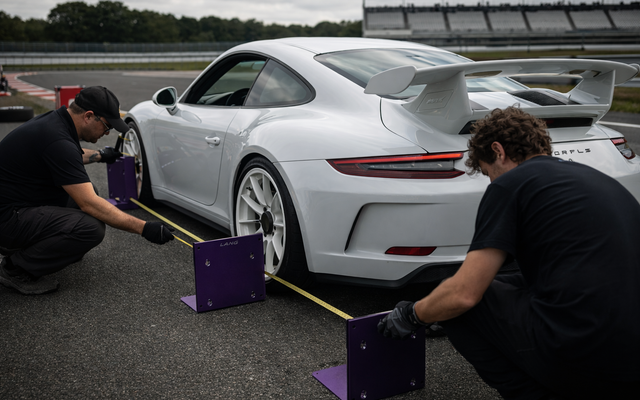
Once the core parts is fitted, the next vital stage in the development is the precise setting of the chassis's alignment. This is the domain of car suspension tuning, a methodology that can appear intimidating to the beginner but is, in fact, the defining factor to transforming a set of high-performance pieces into a cohesive and consistent machine. The most discussed aspect of alignment for drifting is undoubtedly camber angle. Camber angle is the tilt of the wheel in relation to the upright line when looked at from the forward of the vehicle. When the upper part of the tire is leaning inward, this is called camber-in. In sliding, negative camber on the front wheels is universally employed and is considered necessary. The reason is fundamentally linked to tire contact.
When a vehicle is turning at high sideways angles, the frame leans toward the external of the corner. This chassis roll makes the outer steering tire to reduce its optimal contact patch with the tarmac. By applying inward lean, the wheel is pre-angled to counteract this lean. As the car leans into the bend, the outside front tire gains a better contact patch on the track, maximizing its grip at the precise point when it is absolutely essential for steering authority. Usually, front adjustments for a serious drift machine range from approximately -3 degrees to as high as -5 degrees or even greater, depending on the specifics of the vehicle configuration, tire type, and pilot preference. The back tires also utilize negative camber, but the values are typically less and less aggressive than the front. Excessive negative camber at the back can cause the vehicle to overly prone to oversteer and challenging to predict on throttle application, as it shrinks the effective grip area of the powered tires during forward acceleration. Thus, rear adjustments are often in the vicinity of -1 degree to -3 degrees, striking a precise compromise between providing sufficient cornering traction to assist in initiating and maintaining the drift while also keeping good hook-up for acceleration the bend. camber angle is merely one element of the more complex alignment puzzle, which also encompasses toe, self-centering steering, and bump steer adjustment.
Toe describes the orientation of the wheels as seen from above. Inward toe means the leading edges of the wheels are closer together than the trailing edges, while negative toe means the opposite. For sliding, a slight amount of front axle toe-out is often employed to improve the initial handling feel, making the car feel more agile and willing to begin a slide. Rear toe setting is generally set to neutral or a very small amount of positive toe to foster stability under power. self-centering is the longitudinal or rearward tilt of the kingpin axis when looked at from the lateral of the chassis. Positive caster improves feedback and stability solidity, and it additionally adds to camber gain during cornering, which is highly advantageous. Tuning these settings is a intricate interaction where a modification to a single value can and often will influence the remaining parameters. The conventional process for setting a chassis's suspension geometry for competition has long been a tedious process of guesswork and adjustment. A pilot or crew would apply a adjustment based on intuition, drive the car on track, rely on the driver's subjective perception and impressions, and then make another adjustment. This process would iterate time after time until the chassis felt "right" or the allotted testing session ran out. This methodology is not only exceptionally wasteful in terms of man-hours and tires, fuel, and parts, but it is additionally fundamentally imprecise.
Pilot sensation is a infamously inconsistent data source, influenced by many variables such as tiredness, changing track conditions, weather, and just the mindset of the driver on that given run. What feels "oversteery" on one lap might feel "understeery" on the next lap, causing contradictory information and frustrating adjustments. This traditional problem in vehicle dynamics optimization is precisely where modern technology has made its mark to completely change the methodology.
The development and adoption of sophisticated drift telemetry software has ushered in a radically different age for building and perfecting high-performance drift cars. This new generation of systems, showcased by groundbreaking systems like modern telemetry hardware, function by actively capturing the actual mechanical performance of the car as it is being driven on the course. Unlike depending on driver feedback, these tools gather objective information on critical variables such as damper compression and extension, individual tire rotation, acceleration forces, lock position, and driver input input. This acquired data stream is then processed by powerful applications that can graph and analyze the information in a comprehensible manner. For the very first time, engineers and teams can observe exactly what the chassis is doing at each moment of a drift. This function changes the entire chassis setup process. Imagine the aforementioned challenge of setting the front negative camber for a particular chassis. Instead of applying a change from -3 degrees to -3.5 degrees and then running multiple laps to try and "perceive" a improvement, a vehicle dynamics tool can deliver real-time and clear feedback. The application can show graphically how the wheel's loading is behaving during the critical phases of a drift: initiation, mid-corner, and changing direction. It can show if the current camber setting is allowing the steering tire to achieve ideal contact or if the rubber is working inefficiently on its outer edge.
The tool can subsequently suggest fact-based advice for modification. Perhaps the information reveals that the tire is even overworking its sidewall at -3.5 degrees of camber, suggesting that even more negative camber, say -4 degrees, might be warranted. Alternatively, the data might show that the tread is not reaching optimal operating temp or that the inner shoulder is wearing excessively, which could indicate that there is overly aggressive angle and a modest decrease back to -3.2 degrees would be more efficient. This degree of accuracy and useful insight was completely impossible in the time of pure seat-of-the-pants adjustment.
The effect of using a advanced vehicle dynamics tool reaches much further than only dialing in alignment. It functions as an priceless suspension tuning guide that is customized to your specific vehicle. When fine-tuning the rebound and compression values on your adjustable dampers, rather than depending on imprecise advice or replicating another car's settings, you can use the telemetry to analyze how the car is behaving in reaction to your changes. The software can graph the damper movement path over a run, highlighting if the shocks are controlling the chassis motion properly or if they are permitting the car to become unsettled too much after a flick. It can aid in pinpointing issues like hitting the bump stops or topping out, permitting you to make data-backed choices to helper springs, damping values, or ground clearance. This approach extends equally to the intricate car suspension tuning task of corner balancing. In addition to camber, the system can offer data into how changes to toe settings and caster are affecting the chassis's balance during different parts of a slide. For instance, it can assist you to determine the best amount of front axle toe-out for your particular steering rack configuration and driving technique by measuring the speed of turn-in response and the consistency of the car at full lock. This makes the system an incredibly effective performance optimization handbook that is dynamically informed by the real-world performance of your specific car on the tarmac. It moves the whole project from a mysterious craft into a scientific engineering procedure.
Furthermore, the value of a tool like GripDial is not at all confined to experienced tuners with extensive budgets. For the club-level driver, it serves as an amazing educational tool. It effectively gives the tuner with the insight of a full-time suspension specialist without the corresponding expense. It drastically shortens the learning curve by providing unambiguous solutions to problems that would traditionally take countless track days of experience to understand. A builder can understand how their individual vehicle responds to various adjustments, gaining a more intuitive understanding of vehicle dynamics in the endeavor. It additionally opens up professional suspension engineering concepts, allowing anyone with the desire to optimize their car to achieve it in a systematic and productive way. This is especially valuable in a discipline like sliding, where tuning know-how has traditionally been a tightly held asset among elite drivers. Today, that capability can be in the garage of any serious driver.
In conclusion, the journey to building and tuning the ultimate competitive sliding vehicle is a comprehensive mission that smoothly blends time-honored mechanical principles with 21st-century telemetry solutions. It starts with the strategic selection of a legendary car, then built upon the integration of essential performance parts like drift-spec angle modification systems and correctly specified competition coilovers. The process then moves into the intricate realm of car suspension tuning, where values like negative camber, toe, and caster are precisely configured to suit the vehicle's upgraded geometry and the pilot's specific needs. Ultimately, and what truly differentiates the contemporary approach from the old ways, is the integration of a powerful suspension tuning application. This tool eradicates drift angle kits the uncertainty and inefficiency of only feel-based tuning by giving objective, actual data on how the chassis is truly functioning. It serves as an indispensable diagnostic aid, a actionable alignment optimization handbook, and a master chassis development system. Together, this complete methodology guarantees that all element of the competition vehicle—from the choice of the car to the final adjustment on the damper—is refined for ultimate performance on the circuit. It represents the complete progression of the sport of sliding, connecting raw car control with data-informed chassis dynamics suspension tuning tool to build the perfect effective cars attainable.